Iran War Exposes Frailties of No-Hire U.S. Economy
U.S. job growth is slowing to a near standstill, and the Iran war is making that weakness harder to ignore. Here's why a fragile labor market poses greater risks when geopolitical uncertainty is already high.
The United States economy is facing a stress test it may not have been built to endure. Fresh Reuters reporting reveals that U.S. job growth is slowing to a virtual standstill, a development that by itself might warrant cautious attention. But this labor-market weakness arrives at a moment when the Iran war is already straining confidence and forcing policymakers and investors to reassess the resilience of the broader economy. The convergence of these two forces—stubborn weakness in hiring and elevated geopolitical risk—is exposing structural fragility that many analysts and officials may have underestimated.
The immediate narrative is straightforward: American businesses are hiring far less aggressively than they were even months ago. What makes this development consequential now, however, is that a labor market already operating near its floor is colliding with an environment of heightened uncertainty. In normal times, a slowing in job creation might be absorbed as a temporary adjustment. In an era defined by the Iran conflict and its potential for economic disruption, the same slowdown looks like a warning signal that the system has less capacity to absorb further shocks.
This is not simply an employment story. It is a story about how geopolitical stress lays bare the vulnerabilities of an already stretched economy, and why that matters for everyone from wage earners to Wall Street.
What the Labor Market Slowdown Reveals
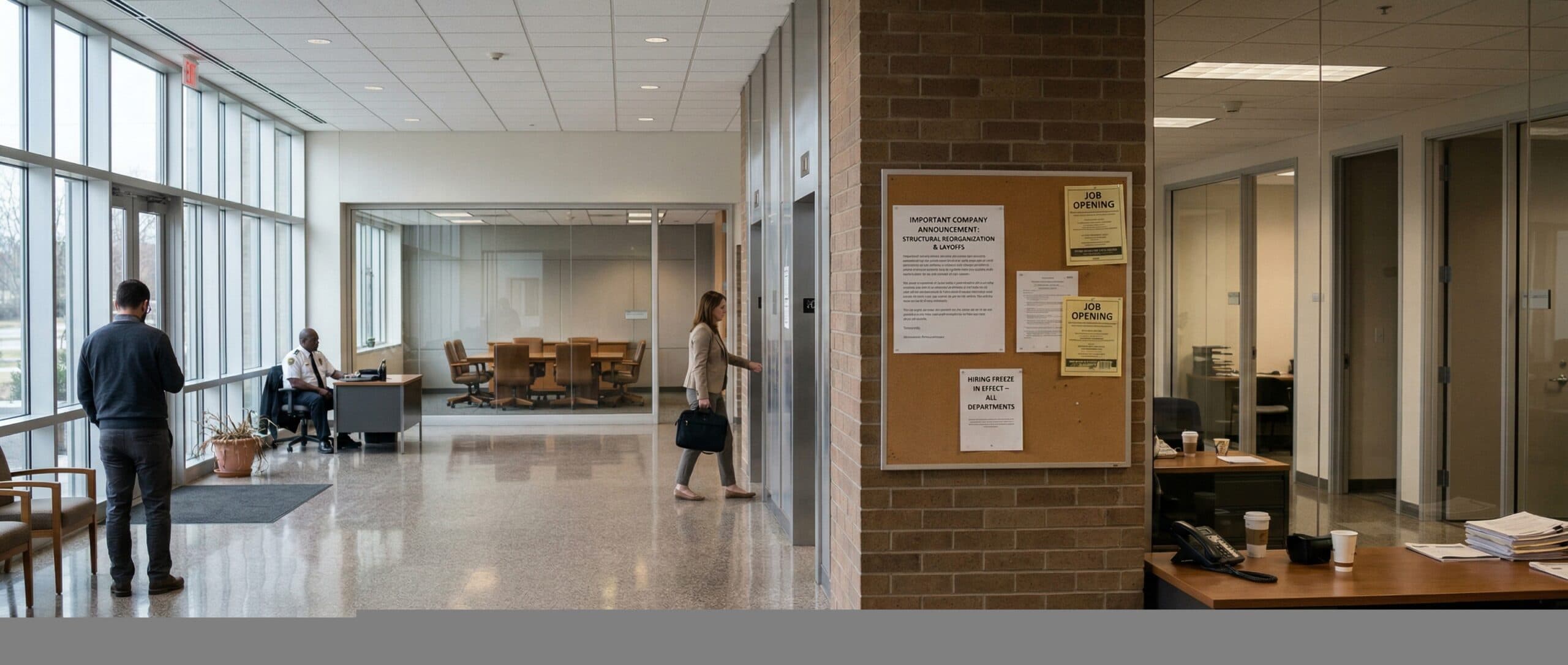
Job growth in the United States has been a bright spot in economic reporting for years, even as other indicators showed signs of softening. But that narrative is shifting. The Reuters reporting indicates that hiring has decelerated dramatically, approaching what economists sometimes describe as a “no-hire” economy—a state in which businesses remain so cautious about the future that they significantly constrain new employment even in the absence of an outright recession.
A “no-hire” economy does not necessarily mean that companies are laying off workers en masse or that unemployment is spiking. Rather, it describes an environment of extreme caution in which employers treat every hiring decision as discretionary, defer wage growth, and rely more heavily on existing staff stretched across growing responsibilities. It is the labor market equivalent of an organization in defensive mode.
Why this matters now is the crucial context. Before the Iran war escalated, a slowdown in job growth might have been interpreted as a cyclical adjustment or a sign that the labor market was finally cooling after years of tightness. Today, that same slowdown carries a different weight. It suggests that the U.S. economy was already fragile before geopolitical tensions spiked, and those tensions are likely to make businesses even more reluctant to commit resources to expansion or hiring.
The timing compounds the concern. Policymakers and investors were already grappling with questions about the sustainability of growth and the strength of consumer demand. Weak hiring accelerates those doubts. When labor-market momentum stalls in an already uncertain environment, the natural response from both business leaders and financial markets is to become more conservative. That conservatism, in turn, becomes self-reinforcing: cautious hiring begets cautious spending, which justifies further caution in hiring.
Why Geopolitical Stress Sharpens the Focus on Labor Weakness
The Iran war did not cause the slowdown in American job growth, but it is making that slowdown impossible to ignore or rationalize away. This distinction is important. The underlying weakness in the labor market reflects genuine caution among American businesses about the economic outlook—caution that predates the current escalation of Middle Eastern tensions. What the war does is remove any remaining excuse for policymakers and investors to treat that weakness as manageable.
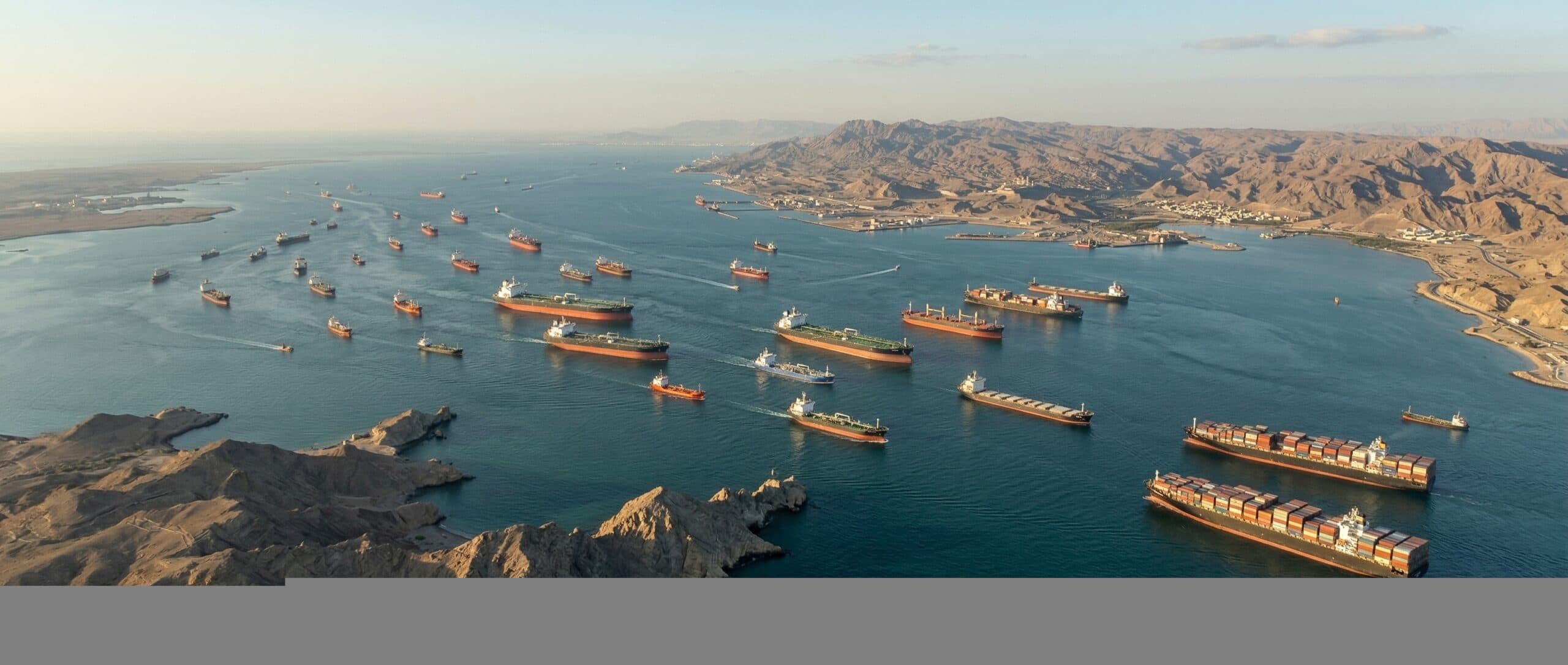
Geopolitical shocks work through multiple channels. The most direct is supply chain disruption: conflict in the Middle East has historically raised energy prices and created logistical challenges that ripple through global commerce. The less visible but potentially more damaging channel operates through confidence and expectations. When businesses are uncertain about geopolitical developments, they defer decisions. They postpone hiring, delay capital investment, and reduce inventories. That behavioral shift can persist even if the direct economic impact of the conflict remains limited.
What makes the current moment particularly fragile is that American businesses are entering a period of elevated geopolitical risk from a position of already weakened labor-market momentum. In economic terms, this is a poor place to absorb a shock. An economy with strong job growth, rising wages, and robust hiring has more cushion to absorb supply disruptions or a temporary hit to confidence. It can weather uncertainty because the underlying trends are supportive. An economy in which hiring is already near a standstill has far less such cushion. Every incremental slowdown matters more. Every unexpected event becomes harder to absorb without triggering broader damage.
Policymakers and investors are attuned to this dynamic. They understand that weak job growth in normal times might be tolerable, but weak job growth alongside geopolitical stress is a different story entirely. It raises the question of whether the economy can maintain stable growth, employment, and financial conditions through a period of sustained uncertainty. The answer is no longer obvious.
Who Bears the Most Acute Risk
The consequences of a no-hire economy converging with geopolitical stress are not distributed evenly. American workers are among the first to feel the pressure. In an environment where hiring is cautious, job seekers face longer searches and less bargaining power for wage growth. Workers already employed become vulnerable to reductions in hours or benefits. Young people and those without strong networks or credentials face particular headwinds in a market where employers are selective and conservative.
Employers themselves occupy an uncomfortable middle ground. Smaller and mid-sized businesses, especially those with exposure to supply chains affected by Middle Eastern conflict, face compounding uncertainty. They must decide whether to maintain current staffing levels, reduce headcount to preserve cash, or continue hiring despite the uncertain environment. That calculus is difficult in any circumstance; it is nearly paralyzing when geopolitical risk is simultaneously rising.
Investors are watching closely because labor-market weakness is a leading indicator of broader economic stress. A slowdown in job growth often precedes declines in consumer spending, corporate earnings, and overall growth. For those managing equity and bond portfolios, the combination of weak hiring and geopolitical risk is a red flag. It suggests that the economy may be more vulnerable to a significant downturn than headline figures might imply. The Iran war, in this context, is not simply a geopolitical event; it is a stress test that reveals how much margin for error remains in the financial system.
Policymakers face their own difficult terrain. The Federal Reserve must weigh whether to maintain its current interest-rate posture or adjust policy in response to labor-market weakness. Too tight a policy stance could tip the economy toward recession; too loose a stance could allow inflation to reaccelerate if the war drives up energy prices. Meanwhile, Congress and the executive branch must consider whether fiscal support is warranted to cushion the economy against the dual pressures of weak hiring and geopolitical uncertainty. None of these decisions are straightforward when the underlying data is ambiguous and the external environment is volatile.
The Broader Question of Economic Resilience
The story of weak job growth exposed by the Iran war is ultimately a story about the resilience of the American economic system. For years, policymakers have operated on the assumption that the U.S. economy is structurally sound—that even if growth is not robust, the underlying fundamentals are strong enough to absorb shocks and recover. The current convergence of labor-market weakness and geopolitical stress is testing that assumption in real time.
What the data suggests is that the economy may be less resilient than it appears. A labor market operating near a standstill is not the foundation of a system that can easily withstand additional pressure. When job growth is anemic, consumer confidence typically erodes more quickly. Spending softens. Business investment declines. Financial conditions tighten. These dynamics can feed on themselves, creating a vicious cycle that is hard to break once it starts.
The Iran war is acting as a stress test precisely because it is raising the stakes at a moment when the system is already showing signs of strain. If the conflict remains limited in scope and duration, the economy may navigate the current period without major damage. But if the conflict widens, energy prices spike further, or confidence deteriorates more sharply, the weak labor market becomes a vulnerability rather than merely a headline to monitor. The combination of the two forces—one domestic, one geopolitical—is more consequential than either would be in isolation.
This is what analysts mean when they speak of economic fragility. It is not a collapse or a crisis in the conventional sense. It is a state in which the economy has less margin for error, fewer resources to deploy in response to shocks, and greater vulnerability to negative feedback loops. A labor market near a standstill, operating in an environment of elevated geopolitical risk, is a textbook example of that fragility.
What Can and Cannot Be Concluded
It is important to be precise about what the current reporting establishes and what it does not. The Reuters reporting makes clear that U.S. job growth is slowing to a virtual standstill and that this weakness is occurring in the context of the Iran war. It also frames this combination as revealing vulnerabilities in the American economy that deserve scrutiny from policymakers, investors, and analysts.
What cannot be concluded from the current reporting alone is precisely how the war will affect job creation going forward, or what specific policy responses are warranted. The research does not provide granular employment numbers, sector-by-sector breakdowns, or forecasts of future hiring. It does not claim that the war is directly causing job losses, only that it is sharpening attention on existing labor-market weakness. It does not specify whether the slowdown is temporary or structural, though the framing suggests concern that it may represent a more durable shift in business behavior.
The careful reader should treat this article not as a prediction of imminent economic collapse, but as a signal that a previously overlooked vulnerability is now impossible to ignore. The labor market was slowing before the war. The war is simply making that slowdown matter more because it raises the cost of economic fragility. The distinction is important and worth preserving.
What Comes Next
The implications of this convergence will likely shape the news cycle for months to come. Market watchers will closely monitor future employment reports to determine whether the slowdown is accelerating or stabilizing. Policymakers will face increasing pressure to respond with either fiscal stimulus or monetary accommodation. Investors will reassess their exposure to sectors and assets most vulnerable to a sustained period of labor-market weakness and geopolitical uncertainty.
The story will also become more complex as time passes. The immediate focus is on the labor market as a barometer of economic health. But if hiring weakness persists, attention will likely shift to what it means for consumer spending, corporate profitability, and financial stability. If the Iran conflict escalates, energy prices could become a more pressing concern, potentially overriding labor-market dynamics in the near term. The interaction of these forces will determine whether the current period of anxiety gives way to adaptation or to something more serious.
What readers should understand is that this is not a routine employment update. It is a moment in which domestic economic weakness and geopolitical stress are converging in ways that expose the fragility of systems that may have appeared more resilient than they actually are. That matters for anyone trying to understand the economy, the markets, and the stakes of the moment.
Frequently Asked Questions
What does a “no-hire” economy mean?
A no-hire economy describes a labor market characterized by extremely weak or nearly stalled hiring activity, even without outright employment collapse. Businesses remain so cautious about future prospects that they treat new hiring as discretionary and significantly constrain recruitment efforts. Workers remain employed, but new opportunities become scarce and wage growth typically stalls.
Why does the Iran war matter for the U.S. economy?
Geopolitical shocks like the Iran war affect economies through multiple channels: potential supply chain disruptions, energy price volatility, and most importantly, shifts in business confidence and hiring behavior. When uncertainty rises, companies postpone decisions and become more conservative. This matters most when the underlying economy is already weak, because there is less margin for error.
Is U.S. job growth really stopping?
The Reuters reporting indicates that job growth is slowing to a virtual standstill, which signals very weak momentum rather than a complete halt. Hiring is not at zero, but it is moving in a direction that concerns analysts and policymakers, particularly given the concurrent geopolitical environment.
Who should pay attention to this story?
Policy analysts, investors, business leaders, job seekers, and anyone interested in understanding the economic implications of the Iran war should track this development. The story is relevant to financial markets, labor policy, consumer spending expectations, and broader assessments of economic vulnerability.
Is the war directly causing the slowdown in hiring?
The provided research does not establish direct causation. The slowdown in job growth reflects caution among American businesses that predates the current escalation of Middle Eastern tensions. The war is making that existing weakness more consequential by raising the stakes and reducing tolerance for economic fragility.
Why does this matter more now than it would have before the war?
Weak job growth in isolation might be manageable or temporary. But weak job growth occurring simultaneously with elevated geopolitical risk significantly reduces the economy’s capacity to absorb shocks. The combination makes labor-market weakness harder to dismiss and raises legitimate concerns about broader economic resilience.