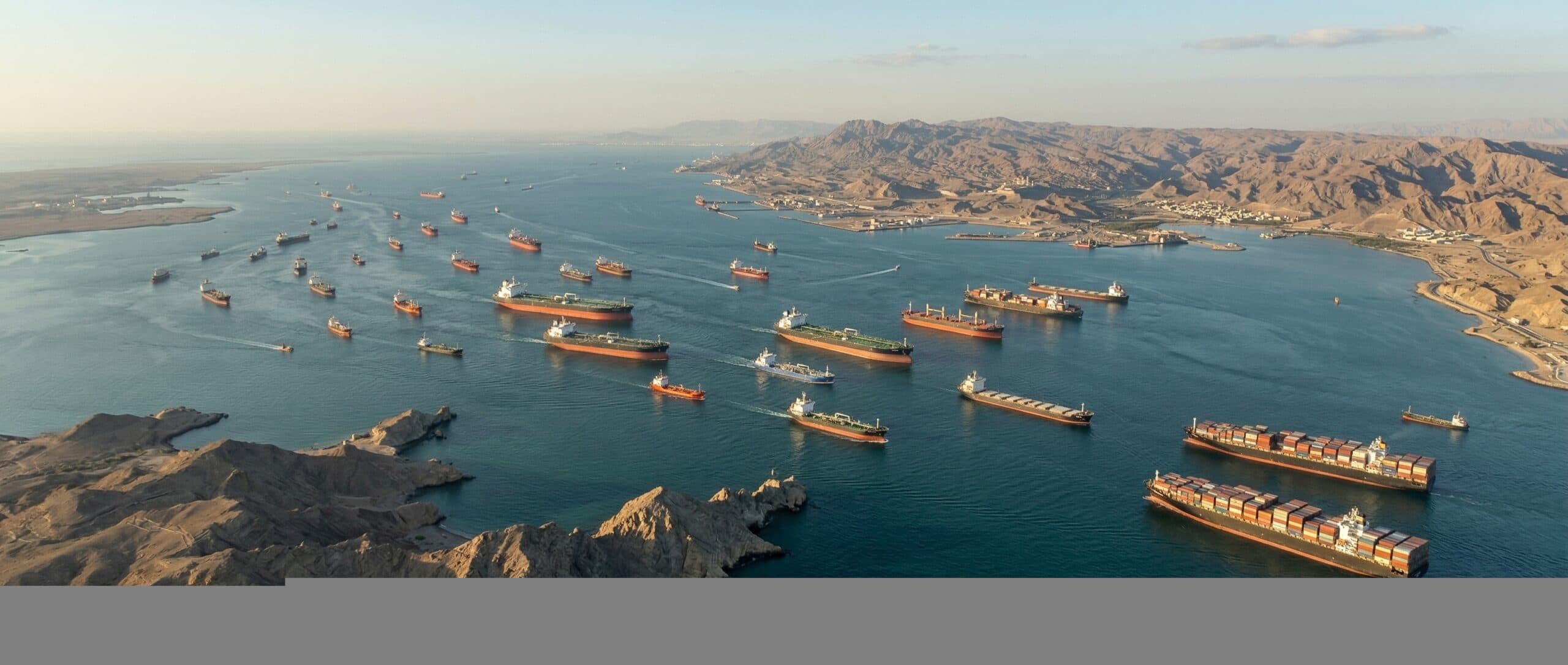
More Than 40 U.S. Allies Prepare Contingency Plan for Strait of Hormuz Amid Trump's Iran War
Allied governments are coordinating a fallback strategy for one of the world's most critical shipping routes as tensions escalate. The meeting signals deep international concern about disruptions to global trade and energy flows.
More than 40 U.S. allied governments met Thursday to discuss contingency plans for the Strait of Hormuz, according to Bloomberg reporting, signaling that international concern over the waterway has grown beyond bilateral U.S.-Iran tensions into a broader geopolitical and economic security issue.
The meeting represents a coordinated response to crisis conditions in one of the world’s most critical shipping chokepoints, triggered by escalating tensions linked to the Trump administration’s war on Iran. The fact that so many governments are preparing fallback strategies suggests they are bracing for a scenario in which ordinary commercial and naval access to the strait becomes unreliable or constrained.
This development carries weight far beyond maritime policy. The Strait of Hormuz is not simply another waterway. It is the passage through which roughly one-fifth of the world’s traded oil flows, along with significant volumes of liquefied natural gas and other goods. Any prolonged disruption there can trigger ripples across global supply chains, energy markets, and the economies of nations that depend on steady shipping routes. The allied meeting is a signal that governments worldwide are taking the possibility of such disruption seriously.
What the Allied Meeting Reveals About the Crisis
The convergence of more than 40 governments around Strait of Hormuz contingency planning is itself a form of communication. It tells the Trump administration that the international community views the crisis as a systemic threat, not merely a regional confrontation. It tells energy and shipping markets that preparation for disruption is underway at the highest diplomatic levels. And it tells Iran and other actors that the fallout from any further escalation would be treated as an international security matter requiring coordinated response.
According to the Bloomberg report, the allies met to discuss how to reopen or stabilize the waterway if conditions deteriorate further. This framing is crucial: the governments involved are not discussing whether to intervene militarily or take unilateral action. They are discussing contingency planning—the preparatory work that happens before a crisis becomes acute. It is a defensive posture, not an offensive one, but it underscores how seriously allied capitals are treating the risks.
The timing of the meeting, coming during an active escalation phase, reflects the urgency with which allied governments are viewing the threat. When more than 40 nations coordinate on a single waterway, it signals that the issue has moved beyond the margins of diplomatic conversation into active crisis management mode.
Why the Strait of Hormuz Is a Global Pressure Point
Understanding why this meeting matters requires understanding what makes the Strait of Hormuz uniquely important to global commerce and security. The strait is a narrow passage of water between Iran and Oman, roughly 21 miles wide at its narrowest point. Despite its small geographic footprint, it is the world’s most critical oil chokepoint.
Approximately one-fifth of all globally traded oil passes through the Strait of Hormuz each day. For context, that amounts to roughly 21 million barrels per day during normal trade conditions. The strait also carries significant volumes of liquefied natural gas and other energy products. For many countries—particularly in Europe, Asia, and parts of the developing world—this waterway is not an optional route. It is the primary access point to energy supplies that power economies and heat homes.
Because the strait is so narrow and its strategic importance so outsized, any disruption there creates immediate market reactions. Energy prices rise, insurance costs for shipping increase, and supply chains that depend on predictable delivery schedules face delays and uncertainty. The economic effects spread quickly because energy and shipping are foundational inputs to nearly every other sector of the global economy.
This is why contingency planning around the Strait of Hormuz is not merely a naval or security concern. It is an economic security issue that touches inflation, employment, consumer prices, and investment decisions across the world. When more than 40 governments coordinate on the strait, they are signaling that they understand the systemic risks involved.
What the Allies Are Signaling to Trump
The allied meeting carries a diplomatic message as well as a practical one. By coordinating openly on a contingency plan for the strait, allied governments are communicating several things to Washington and other key actors. First, they are saying that the international community is preparing for outcomes it cannot control and may not have chosen. Second, they are signaling that any disruption to the strait will be treated as an international problem requiring a multilateral response, not a bilateral U.S.-Iran matter to be resolved only between Washington and Tehran.
Third, and perhaps most importantly, the coordination itself is a message to the Trump administration about the scale of international concern. When allied governments invest diplomatic capital in meeting to discuss contingency plans, it is often because they are worried that existing policy is moving in a direction they view as risky. The meeting does not necessarily mean allies oppose U.S. policy on Iran. It means they are preparing for consequences that extend beyond the immediate U.S.-Iran relationship.
This kind of coordination also reflects a historical pattern in international security. When multiple governments begin contingency planning around a single issue, it is usually because they believe the status quo is unstable and that preparation is prudent. It is a form of insurance diplomacy—positioning themselves to respond effectively if a feared scenario unfolds.
The Broader Systems Consequences
The significance of the Strait of Hormuz crisis extends well beyond the waterway itself. A disruption there would ripple through multiple interconnected systems that most people do not think about until supply chains break or prices spike.
Energy markets would face immediate pressure. Oil prices would likely rise sharply because traders would factor in the risk of sustained supply disruption. Natural gas markets, particularly liquefied natural gas that serves Europe and Asia, would experience similar volatility. Insurance and shipping costs would increase as companies priced in the risk of transit delays or rerouting. Some shipments might need to take alternate routes around Africa, adding weeks to transit time and significant cost.
Manufacturing and supply chains would feel downstream effects. Just-in-time manufacturing systems, which depend on predictable delivery of inputs, would face disruptions. Companies that source raw materials from the Middle East or ship goods through the strait would experience delays. Inflation could accelerate if energy costs rise and stay elevated. Consumer prices for goods dependent on stable shipping and energy costs would increase.
For developing economies and countries dependent on energy imports, a Strait of Hormuz disruption could be catastrophic. Nations that lack energy reserves or alternative supply routes could face shortages. The economic damage could extend beyond shipping and energy into broader development challenges.
This is why the allied meeting matters so much. Governments are not meeting to discuss a minor maritime logistics issue. They are preparing for a scenario that could affect inflation, employment, investment, and geopolitical stability across multiple regions. The crisis highlights how a regional conflict can become a systemic threat when it involves chokepoints in global infrastructure.
What to Watch Next
The story around the Strait of Hormuz contingency planning is still developing. Several developments will be worth monitoring in the coming weeks and months. First, watch whether the allies move from discussion to a concrete, detailed action plan. Contingency planning can remain at the level of diplomatic conversation, or it can evolve into specific operational procedures and agreements. If governments begin signing formal agreements or establishing coordination mechanisms, it would signal a higher level of readiness.
Second, monitor whether the Strait of Hormuz crisis worsens or stabilizes. If tensions escalate further and access to the waterway becomes actually constrained, the contingency planning could shift from theoretical to operational. Conversely, if diplomatic channels produce a de-escalation, the urgency around contingency planning may ease. Watch for announcements from Washington, Tehran, or allied capitals about negotiations or policy shifts.
Third, pay attention to how Trump, Iran, and allied governments communicate about the crisis publicly and privately. Official statements from allied governments will reveal how seriously they are treating the situation. Any hardening or softening of rhetoric from the Trump administration or Iran could signal whether further escalation is likely. Private diplomatic channels are harder to observe, but any breakthroughs or setbacks will likely become visible eventually.
Finally, watch energy and shipping markets for signs of pricing pressure or supply concerns. Market behavior often reflects private sector assessments of risk. If oil prices rise or shipping costs spike on the back of Hormuz concerns, it will be a signal that businesses believe disruption is a real possibility.
Frequently Asked Questions
What is the Strait of Hormuz?
The Strait of Hormuz is a narrow waterway between Iran and Oman that connects the Persian Gulf to the Gulf of Oman and the Arabian Sea. Despite its small geographic size—roughly 21 miles wide at its narrowest point—it is the world’s most critical oil chokepoint. Approximately one-fifth of all globally traded oil passes through the strait each day, making it essential to global energy security and commerce.
Why are U.S. allies preparing a contingency plan?
Allied governments are responding to the escalating crisis linked to the Trump administration’s war on Iran. They are concerned that tensions could disrupt access to the Strait of Hormuz, which would affect shipping, energy flows, and trade worldwide. By preparing contingency plans, the allies are positioning themselves to respond effectively if disruption occurs and seeking to coordinate their response with other governments.
Does this mean the allies are launching a military operation?
No. Based on the available reporting, the allies are discussing contingency planning, which is a preparatory diplomatic and strategic step. Contingency planning involves developing procedures and agreements for how to respond if a particular scenario unfolds. It is not the same as launching or confirming a military operation. The distinction is important: the allies are preparing for a possible crisis, not executing an operational response.
Why does the Strait of Hormuz matter globally?
Because the strait is a critical route for shipping and energy transport, disruption there has effects far beyond the Middle East. A significant constraint on traffic through the strait would raise global oil prices, disrupt supply chains, increase shipping costs, and potentially trigger inflation. Countries across Europe, Asia, Africa, and the Americas depend on stable access to the waterway because of its importance to energy supplies and international trade.
What does the meeting signal to Trump?
The meeting signals that many allied governments are deeply concerned about the crisis and its potential consequences. It communicates that allies are preparing for outcomes that extend beyond the immediate U.S.-Iran relationship and that any disruption will be treated as an international security matter requiring multilateral coordination. It is also a subtle message that the international community is bracing for fallout from continued escalation.
What should readers watch next?
Monitor whether allies move from contingency discussion to concrete operational agreements. Watch for signs of escalation or de-escalation in the Strait of Hormuz crisis. Pay attention to official statements from the Trump administration, Iran, and allied governments. Also observe energy and shipping markets for pricing signals that suggest business confidence in or concern about disruption to the waterway.
The Road Ahead
The meeting of more than 40 U.S. allied governments around Strait of Hormuz contingency planning is significant precisely because it is not dramatic. There is no military operation announced, no intervention declared. Instead, there is careful, methodical preparation for a scenario that governments hope does not occur but are taking seriously enough to plan for.
This kind of coordination is how the international system works when it works well: governments acknowledge a shared risk, communicate across borders, and prepare collectively for adverse outcomes. Whether this particular effort prevents a crisis or merely manages the fallout from one remains to be seen. What is clear is that the Strait of Hormuz crisis has moved from a bilateral U.S.-Iran concern into a multilateral geopolitical and economic security issue. The allied meeting is evidence that the world is paying attention and preparing accordingly.
For readers following U.S.-Iran tensions and their global consequences, this is a development worth taking seriously. It suggests that the crisis is deeper and more consequential than headlines about military tensions alone might indicate. The stakes involve shipping routes, energy security, supply chains, and the stability of systems that billions of people depend on. When more than 40 governments coordinate on a single waterway, it is a sign that the pressure is building and the international system is bracing for impact.