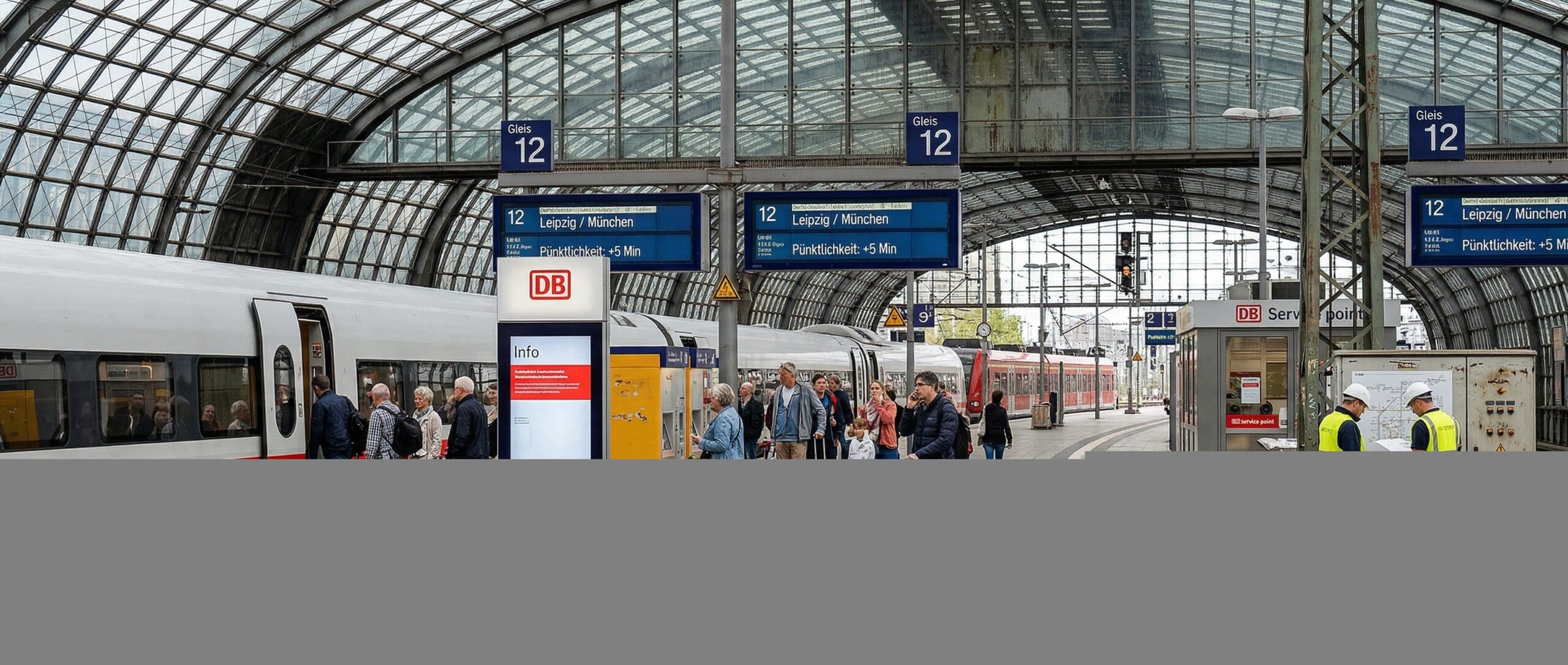
Deutsche Bahn Gets More Investment and Bookings, But Can It Win Back Public Trust?
Germany's state-backed rail operator is seeing stronger-than-expected bookings as Easter approaches and fuel prices climb, but deeper structural problems and years of service decline mean investment alone won't restore passenger confidence.
Germany’s state-backed rail operator Deutsche Bahn is benefiting from a surge in bookings as the Easter holiday approaches, driven partly by rising fuel prices that are making trains more attractive to travelers. The development is encouraging on the surface, but it masks a much larger and more difficult challenge: restoring public trust in a rail system that has suffered years of decline and now requires deep infrastructure modernization.
The immediate news is straightforward. According to recent reporting, Deutsche Bahn is receiving more investment even as bookings run higher than expected, suggesting that circumstances are aligning to create a moment of commercial opportunity for the company. Yet this moment reveals a tension that will define Deutsche Bahn’s future: a temporary uptick in demand does not solve the structural problems that have eroded passenger confidence over a long period.
For readers paying attention to German public infrastructure, transport policy, or simply trying to understand whether their rail system is getting better, the Deutsche Bahn story offers an important lesson about the difference between funding announcements and actual service improvement. It is a story about investment, infrastructure, and public trust—and why all three must work together.
The Short-Term Boost: Why Bookings Are Rising Now
The timing of Deutsche Bahn’s stronger-than-expected bookings is not random. Easter travel is a traditional peak season for German rail, and this year the surge in demand appears particularly pronounced. More significantly, the price of fuel has risen, making alternative transport options like driving less economical or appealing. When the cost of filling a car’s tank climbs, the relative value of a train ticket improves, and some travelers switch modes accordingly.
This is straightforward consumer behavior. Higher fuel prices shift the calculation for budget-conscious passengers, and Deutsche Bahn is the primary rail operator across Germany’s national network, so it benefits directly from this shift. The booking increase is real and measurable in immediate commercial terms.
But here is where the story becomes more complex: a surge in bookings driven by fuel prices and seasonal travel patterns does not necessarily indicate that passengers have regained confidence in Deutsche Bahn as a service provider. Passengers are making a rational choice based on cost, not a vote of trust. That distinction matters enormously when considering what happens next.
The Deeper Problem: An Aging Network and a Fractured Reputation
Beneath the encouraging headline about more bookings lies the reality that Deutsche Bahn has been struggling for years. The company operates an aging rail network that reflects decades of underinvestment and deferred modernization. Tracks need replacement. Trains need updating. Stations need renovation. The infrastructure problem is both visible and felt by passengers on every journey.
More important than the physical state of the network, however, is the damage to public perception. Deutsche Bahn’s long period of decline has created a deep well of skepticism among passengers and the German public. Delays are common. Service quality is inconsistent. Reliability—the single most important metric for a rail operator—has deteriorated to the point where many travelers simply do not expect their train to arrive on time or operate without problems.
This erosion of trust did not happen overnight. It accumulated through repeated negative experiences. A passenger who has experienced multiple delays, overcrowded trains, poor communication, and deteriorating conditions is not reassured by news of investment. That passenger wants to see tangible improvement in everyday service, not promises about future modernization.
This is the structural challenge Deutsche Bahn faces. It is not enough to attract passengers during a moment of high fuel prices. The company must prove that it can deliver reliable, punctual, comfortable service consistently. Until it does, public trust will remain fragile and conditional.
Why Investment Matters—and Why It Is Not a Quick Fix
More funding for Deutsche Bahn is important and necessary. Capital investment can support the modernization of aging infrastructure, the purchase of new trains, the upgrading of signals and safety systems, and the renovation of stations and platforms. Over time, well-directed investment can materially improve a rail network’s capacity, reliability, and passenger experience.
But investment is not magic. Money alone does not instantly restore a damaged system or rebuild eroded trust. Between the decision to spend and the moment a passenger benefits from improved service, there is a long chain of execution: planning, procurement, construction, testing, and deployment. Projects run late. Costs exceed budgets. Technical challenges emerge. The timeline from investment commitment to visible passenger improvement can span years.
Moreover, investment addresses the hardware of the rail system—the tracks, trains, and infrastructure. It is necessary but not sufficient. Passenger trust also depends on software: operational management, workforce training, customer service, communication during disruptions, and a demonstrated commitment to punctuality and reliability. An investor can buy new trains; only management and staff can ensure they run on time and carry passengers safely and comfortably.
This complexity is why the current wave of bookings, while commercially welcome, may not be the turning point Deutsche Bahn’s defenders hope it represents. The test will come when passengers compare their experience over months and years to their expectations. If investment is beginning to produce visible, everyday improvements—fewer delays, better-maintained trains, more responsive customer service, more reliable information—then public trust may begin to recover. If the experience remains inconsistent or deteriorates further, investment will be seen as inadequate or poorly executed, and skepticism will deepen.
Public Trust: The Real Measure of Recovery
For Deutsche Bahn, public trust is not a soft metric or a matter of public relations. It is existential. A rail operator whose passengers do not believe it will deliver reliable service faces a vicious cycle: skeptical travelers choose alternatives when available, reducing revenue and capacity; reduced demand makes it harder to justify investment and operational improvements; service quality stagnates or worsens; trust erodes further.
Conversely, a rail operator that demonstrates consistent reliability, responsiveness, and improvement can attract and retain passengers, generate revenue, justify further investment, and create a virtuous cycle of improvement. Deutsche Bahn is currently caught between these cycles, with the outcome still uncertain.
The reporting on Deutsche Bahn’s current situation highlights the perspective of individual passengers who are making choices based on their experience and expectations. These travelers do not care primarily about investment announcements or corporate strategy. They care about whether their train arrives on time, whether the seats are clean, whether the staff is helpful, and whether they can rely on the service for their daily needs. If Deutsche Bahn can deliver on these basics consistently, trust will follow. If it cannot, no amount of investment will create the confidence the company needs.
What This Means for Germany’s Transport System and Mobility
The stakes in Deutsche Bahn’s recovery extend beyond the company itself. As Germany’s primary rail operator and a central pillar of the national transport system, Deutsche Bahn’s performance affects mobility across the entire country. If trains are reliable and attractive, more people will choose rail over personal vehicles. This has environmental benefits, reduces congestion on roads, and improves quality of life in cities and regions.
Conversely, if rail remains unreliable and untrustworthy, passengers will continue to choose cars, further burdening road infrastructure and increasing emissions. The long-term sustainability of Germany’s transport system depends partly on whether its rail network can become a genuinely attractive alternative to private vehicle use.
This is why Deutsche Bahn’s investment and its ability to restore public trust are not purely commercial matters. They are questions about the country’s transport future, environmental goals, and the quality of public service. A well-functioning rail system is a public good, and Deutsche Bahn is the institution responsible for delivering it.
What to Watch in the Months Ahead
The current surge in Deutsche Bahn bookings provides a natural starting point for monitoring whether the company is genuinely improving. Several key signals will indicate whether this is a temporary Easter bump or the beginning of a durable turnaround.
First, will bookings remain strong beyond the Easter period and after fuel prices potentially moderate? Sustained demand would suggest that passengers are developing confidence in the service, not just responding to temporary price signals. A sharp drop in bookings after Easter would indicate that the surge was seasonal and circumstantial rather than reflective of improved service quality.
Second, will investment translate into tangible, visible improvements in passenger experience? Fewer delays, better-maintained equipment, more reliable information, and clearer communication during disruptions are the kinds of changes passengers notice and judge. Conversely, continued deterioration or stagnation would signal that investment is not producing results.
Third, how will public perception evolve? Will passengers who have experienced repeated poor service begin to see evidence of improvement? Will media coverage and public discourse shift from skepticism toward cautious optimism? These soft signals of trust are harder to measure than booking numbers, but they are crucial indicators of whether Deutsche Bahn is winning back the confidence it has lost.
The immediate outlook remains uncertain. Deutsche Bahn has an opportunity to use this moment of increased ridership as a foundation for broader improvement. But opportunity is not the same as outcome. What matters now is execution: whether the company can convert investment into service improvements, whether management and staff can consistently deliver reliability, and whether passengers can begin to trust their railway again.
Frequently Asked Questions
Why is Deutsche Bahn getting more bookings now?
The reporting indicates that bookings are stronger than expected as Easter approaches, and rising fuel prices are playing a significant role. When fuel costs climb, trains become a more economical choice for travelers, shifting demand toward rail transport. Additionally, Easter is traditionally a peak travel period in Germany.
Does more investment mean Deutsche Bahn is fixed?
No. While investment is important and necessary for modernizing the aging rail network, funding alone does not resolve Deutsche Bahn’s fundamental challenges. The company still faces significant structural problems, including aging infrastructure and a damaged reputation built up over years of unreliable service. Investment must be coupled with effective operational management and consistent service improvement to create lasting change.
Why is public trust such a big issue for Deutsche Bahn?
Deutsche Bahn has suffered a long decline in service quality and reliability, and passengers remember these experiences. Trust for a rail operator depends on delivering reliable, punctual, and comfortable service consistently. Without rebuilding that trust through demonstrated improvement, passengers will continue to view the company skeptically and seek alternatives when available. Public confidence is essential for the company’s commercial success and its role in Germany’s transport system.
Is this story mainly about rail travel demand or infrastructure?
It is both, but the deeper issue is infrastructure and service quality. The current surge in bookings is the immediate news event, but it highlights a larger structural challenge: whether Deutsche Bahn can modernize its aging network, improve daily service quality, and rebuild passenger trust. Demand is temporary; infrastructure and reliability are permanent concerns.
What is making trains more attractive to German travelers right now?
Rising fuel prices are a key factor. As the cost of driving increases, the relative value of train travel improves, encouraging some travelers to switch to rail. Additionally, Easter travel is a traditional peak season for rail journeys. These circumstances are creating temporary conditions favorable to rail demand, though they do not necessarily reflect underlying changes in passenger confidence.
What would count as real progress for Deutsche Bahn?
Real progress would be visible improvements in reliability, punctuality, service quality, and passenger experience. This includes fewer delays, better-maintained trains and stations, more responsive customer service, clearer communication during disruptions, and a measurable shift toward consistent performance. Only when passengers experience these improvements regularly will public trust begin to recover meaningfully.