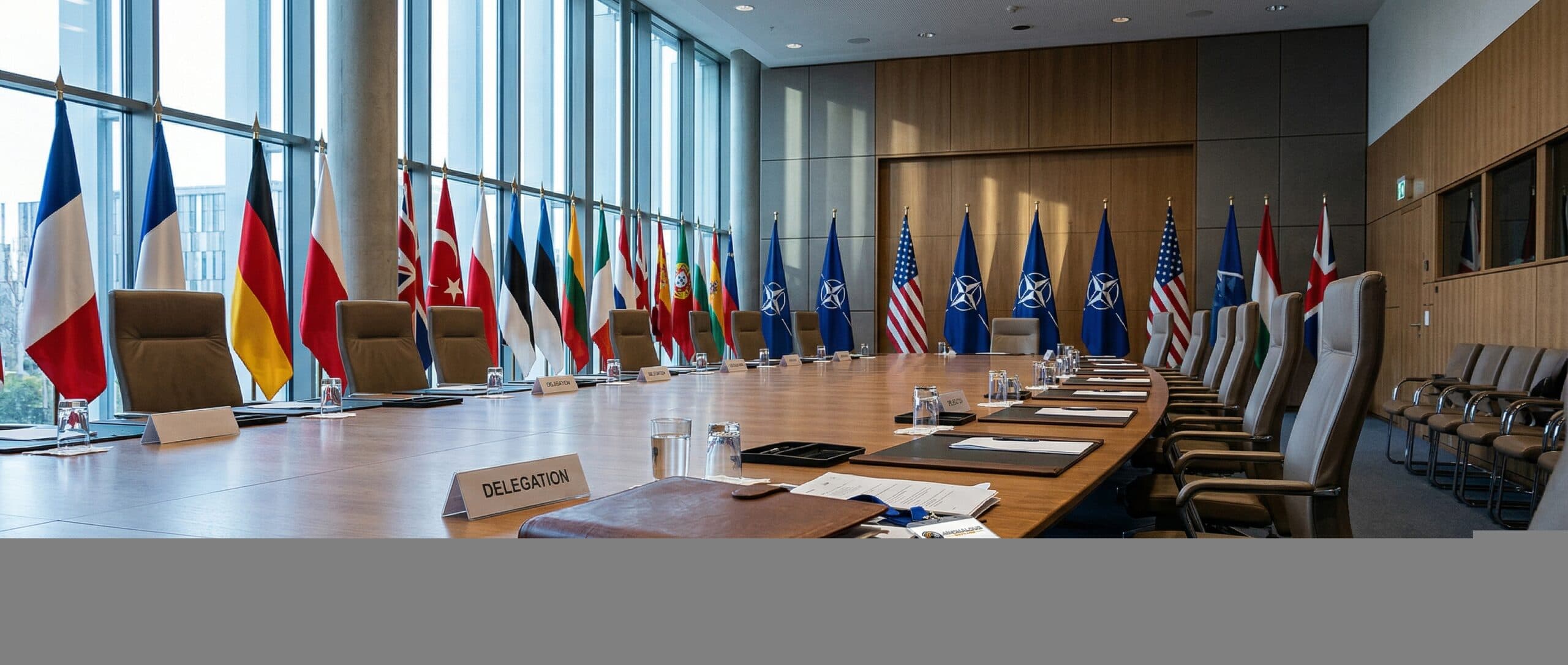
Europe Blocks U.S. Military Access Over Trump's Iran War, Threatening NATO Cohesion
European NATO allies are hardening their resistance to deeper involvement in Trump's Iran conflict, including limiting U.S. military access. The dispute signals a broader test of alliance unity that could reshape transatlantic security coordination.
European NATO allies are increasingly unwilling to support Donald Trump’s military involvement in Iran, and the resistance now extends to blocking or limiting U.S. military access tied to the conflict. The development, reported by Bloomberg on March 31, marks a significant strain on alliance cohesion at a moment when coordinated security policy is supposed to be NATO’s core strength.
The dispute signals something deeper than disagreement over one military campaign. It raises urgent questions about whether NATO can absorb major political divisions during an active conflict, and what happens when European members refuse cooperation that American planners consider strategically essential. If the resistance hardens, the fallout could extend far beyond operational constraints and into the strategic trust that has underpinned transatlantic security for decades.
What Europe is Blocking and Why It Matters
According to fresh reporting from Bloomberg, European NATO members are increasingly reluctant to enable deeper U.S. military involvement in the Iran conflict. The reported pressure includes restricting or denying U.S. military access that would be used in connection with that effort.
This is not a debate over whether to support an ally. It is a direct statement of refusal. European governments are essentially saying: we will not provide the facilities, airspace, or operational cooperation that would make your Iran war easier to conduct.
Why this matters requires understanding what military access means in alliance politics. When the United States plans military operations, it often relies on forward bases, overflight rights, port access, and intelligence sharing from allied nations. These are not luxuries. They are force multipliers that determine whether operations are feasible, cost-effective, and sustainable. When allies withdraw or restrict access, they are constraining not just tactics but strategy.
More importantly, they are sending a political signal. Public or semi-public disputes over military access are inherently corrosive to alliance credibility. If allies are openly refusing cooperation on a major U.S. priority, other partners and adversaries alike will notice. They will wonder whether NATO members can be counted on to coordinate during crises, or whether alliance promises are conditional on political agreement about each conflict.
How the Dispute Is Straining NATO
NATO was built on a premise that has held for more than seven decades: coordinated defense and shared security commitments. Article 5—the mutual defense clause—is the alliance’s centerpiece. But Article 5 assumes that members will work together on strategy and operations, not just invoke a treaty when attacked.
The Iran dispute tests that assumption. European allies are not invoking NATO against the United States. They are simply refusing to participate in what they see as a unilateral U.S. military venture. But their refusal is creating institutional strain because it undermines the implicit social contract of the alliance: if you are willing to lead, we are willing to follow; if we follow, you respect our boundaries.
When one member publicly resists involvement in another member’s military plans, it sends ripples through the entire alliance structure. Other partners begin calculating their own room for disagreement. Adversaries begin testing whether the alliance is actually unified or merely a collection of governments with diverging interests.
Visible splits also damage deterrence. NATO’s strategic value depends partly on the perception that it speaks with one voice on core security issues. If that perception fractures, the alliance’s ability to deter adversaries weakens, even if no operational capability has changed.
Why European Allies Are Pushing Back
The research indicates that European members are increasingly unwilling to be drawn deeper into Trump’s approach to the Iran conflict. But the specific drivers of this resistance deserve careful attention.
One factor is likely political distance. European governments may view Trump’s Iran strategy as more aggressive or escalatory than they are comfortable supporting. NATO allies include countries with complex relationships with Iran, including economic and diplomatic interests that deeper military involvement could jeopardize.
Another factor is the perception of strategic burden-sharing. European allies have repeatedly expressed concern that the United States drives military policy without adequately consulting partners or accounting for European interests. If Trump is pursuing an Iran war without broad alliance consensus, European governments may feel they have the right to say no.
There is also the question of restraint versus escalation. Some European allies may believe that the most responsible path forward involves diplomatic off-ramps rather than deepening military commitment. That belief does not necessarily mean they are abandoning security interests. It means they are choosing a different strategy.
Critically, the research does not provide a fully detailed breakdown of European motivations. The available reporting shows resistance and hardened stances, but not necessarily the complete strategic calculus behind each government’s position. The article therefore frames the pushback as reluctance to deepen involvement without overstating motives that are not fully documented.
What This Could Mean for U.S. Military Operations
When allies restrict military access, the immediate consequence is operational. U.S. commanders and planners lose options. They may need to reroute aircraft, find alternative basing, or accept greater logistical complexity. These constraints do not necessarily make operations impossible, but they make them harder and often more expensive.
More broadly, restricted access creates planning uncertainty. If the United States cannot count on European cooperation, it must design operations on the assumption that such cooperation will not be available. That changes force posture, timing, and risk calculus.
The political signal, however, may matter as much as the operational constraint. If Europe’s resistance becomes widely known, it sends a message to regional actors, other allies, and domestic audiences in the United States that the alliance is divided. That political fragmentation can undermine the strategic leverage that military capability alone provides.
For U.S. policymakers, the situation creates a difficult choice: proceed with operations despite European resistance and accept the diplomatic cost, or scale back ambitions to preserve alliance unity. Neither option is costless. The first damages alliance credibility. The second requires acknowledging that NATO partners can constrain U.S. strategy.
The Broader System Consequence: A Stress Test for NATO
The most significant aspect of this dispute is not the immediate military access question. It is what the dispute reveals about NATO’s ability to maintain cohesion during major strategic disagreements.
Historically, NATO has weathered policy disagreements. Members did not always agree on Bosnia, Kosovo, Iraq, or Afghanistan. But those disputes typically occurred within a framework where the alliance as a whole was engaged. The current situation is different: one member is pursuing a military strategy that other members are openly resisting.
If this pattern continues and spreads, it could redefine how NATO functions. Instead of an alliance that coordinates major security decisions, NATO could become a collective identity that members invoke selectively while pursuing divergent strategies. That would be a fundamental shift in what the alliance means.
The stakes extend beyond Iran. If Europe successfully resists involvement in this conflict, it sets a precedent for future disputes. Will European allies resist again on the next major U.S. military initiative? Will the alliance fragment into coordinated blocs rather than a unified structure?
These questions are not rhetorical. They go to the heart of whether NATO can function as a coherent security organization in an era when members have increasingly divergent views about when military force is appropriate.
What to Watch Next
Several developments will signal whether this dispute is a temporary friction or a sign of deeper rupture.
First, whether Europe’s resistance hardens or softens. If European governments continue to restrict military access and maintain public opposition to the Iran conflict, the alliance rift will deepen. If European governments find a compromise that allows limited U.S. operations in exchange for political concessions, the dispute may be containable.
Second, whether the restriction changes actual access, coordination, or public messaging. Right now, the resistance is reported and acknowledged. But does it actually alter U.S. military plans or operations? Does public acknowledgment of the dispute lead to further fragmentation, or does it prompt negotiation and resolution?
Third, whether the conflict spills over into broader NATO policy disagreements. If disputes about military access to Iran expand into disagreements about NATO strategy in Europe, the Arctic, or Asia, the implications for alliance unity become more severe.
Finally, watch for shifts in messaging from both sides. If U.S. officials begin framing this as a European failure, or if European leaders begin openly questioning NATO’s value, those rhetorical shifts will signal that the alliance is entering a more confrontational phase.
Frequently Asked Questions
What are European NATO allies blocking?
According to recent reporting, European NATO members are increasing their resistance to involvement in Trump’s Iran military campaign and are reportedly limiting or restricting U.S. military access tied to that conflict. This includes access to bases, airspace, facilities, or other operational support that would be used in connection with the Iran effort.
Why does this matter for NATO?
NATO is built on coordinated security policy and mutual commitment among members. When a major military alliance member faces open resistance from other members on a significant security initiative, it signals a breakdown in the coordination that underpins alliance credibility. This kind of visible disagreement can weaken the alliance’s ability to deter adversaries and maintain strategic unity.
Is Europe leaving NATO over this?
No. The resistance reported indicates that European members are unwilling to participate in or support this particular military effort. That is different from withdrawing from the alliance. However, if such resistance becomes a pattern, it could signal deeper questions about whether the alliance can maintain unified security policy.
How does this affect the United States?
If military access is restricted, U.S. military planning becomes more complicated. Operations may require alternative basing, longer supply lines, or different timing. More broadly, the political cost of the conflict rises when major allies openly resist involvement, because it signals that the U.S. is acting without alliance consensus.
Why are European allies pushing back?
The available reporting indicates that allies are increasingly reluctant to get involved in what they may view as Trump’s escalatory approach to Iran. This could reflect concerns about strategy, burden-sharing, diplomatic interests, or a preference for restraint over escalation. The research does not provide a fully detailed breakdown of each government’s specific motives, but the pattern suggests a preference for distance from deeper military commitment.
What is the broader significance of this dispute?
Beyond the immediate issue of military access, this dispute serves as a stress test for NATO’s institutional durability. It raises questions about whether the alliance can absorb major policy disagreements during active conflicts, and what happens when members refuse cooperation on initiatives their partners consider strategically important. The answer to those questions will likely shape how NATO functions in future crises.