China Welcomes EU Lawmakers for First Time in Eight Years, Signaling Diplomatic Reset
China has hosted European lawmakers after an eight-year hiatus, marking a notable diplomatic shift following the lifting of retaliatory sanctions last year. The visit suggests Beijing is working to stabilize a relationship that has been strained by years of geopolitical tension.
After eight years without a visit from European lawmakers, China has opened its doors to members of the European Parliament, a development that carries significant weight in the fraught relationship between Beijing and the European Union. The move marks a rare moment of diplomatic engagement in a relationship that has been defined more recently by tension, retaliatory sanctions, and mutual accusation.
According to Bloomberg reporting on the visit, China’s decision to host the European lawmakers comes after retaliatory sanctions between the two sides were lifted last year. The timing matters because it signals that both China and the European Union appear willing to test a more stable footing, even if the broader relationship remains complicated and contested.
The visit is not a dramatic turning point, but it is a meaningful signal. In the realm of high-level diplomacy, reopening a channel after it has been frozen for nearly a decade suggests intent. For readers watching China-EU relations, understanding what this visit represents—and what it does not—is essential to grasping where the relationship is headed.
What Happened: The Visit and Its Context
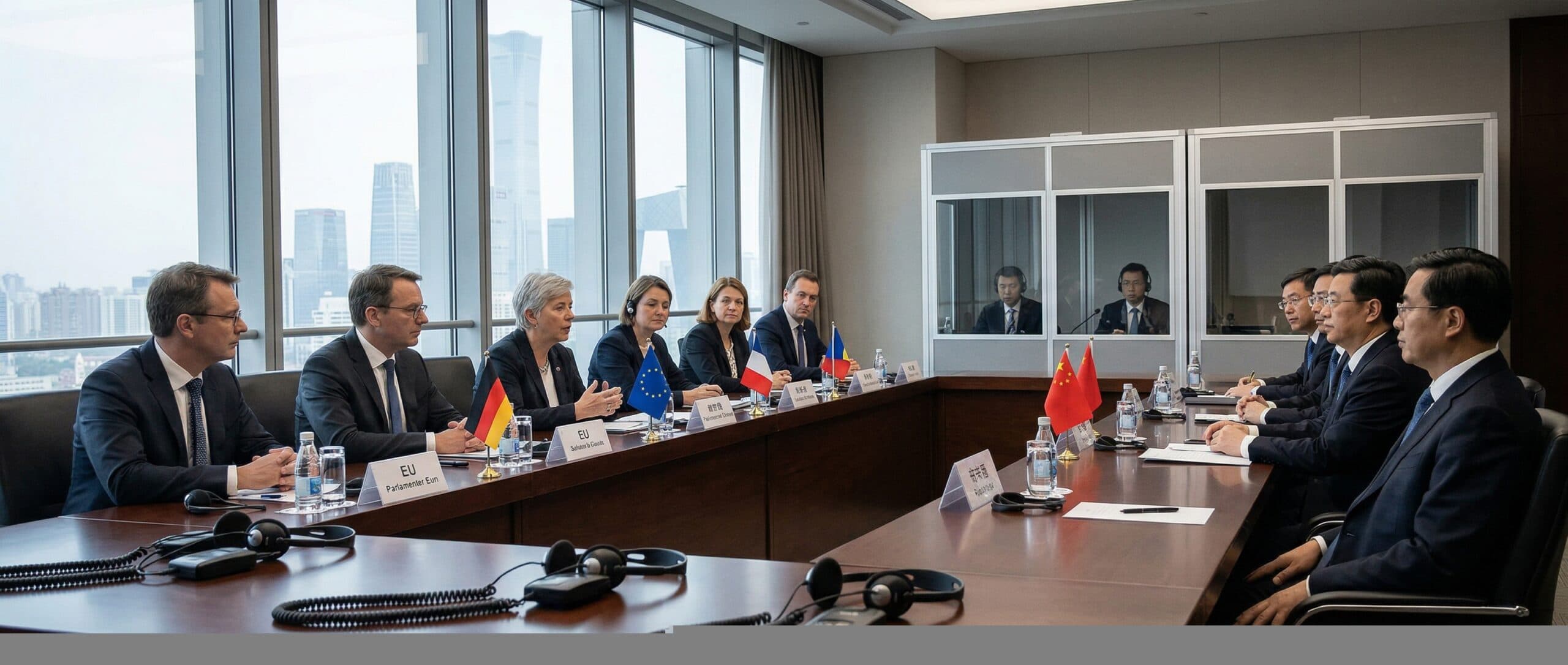
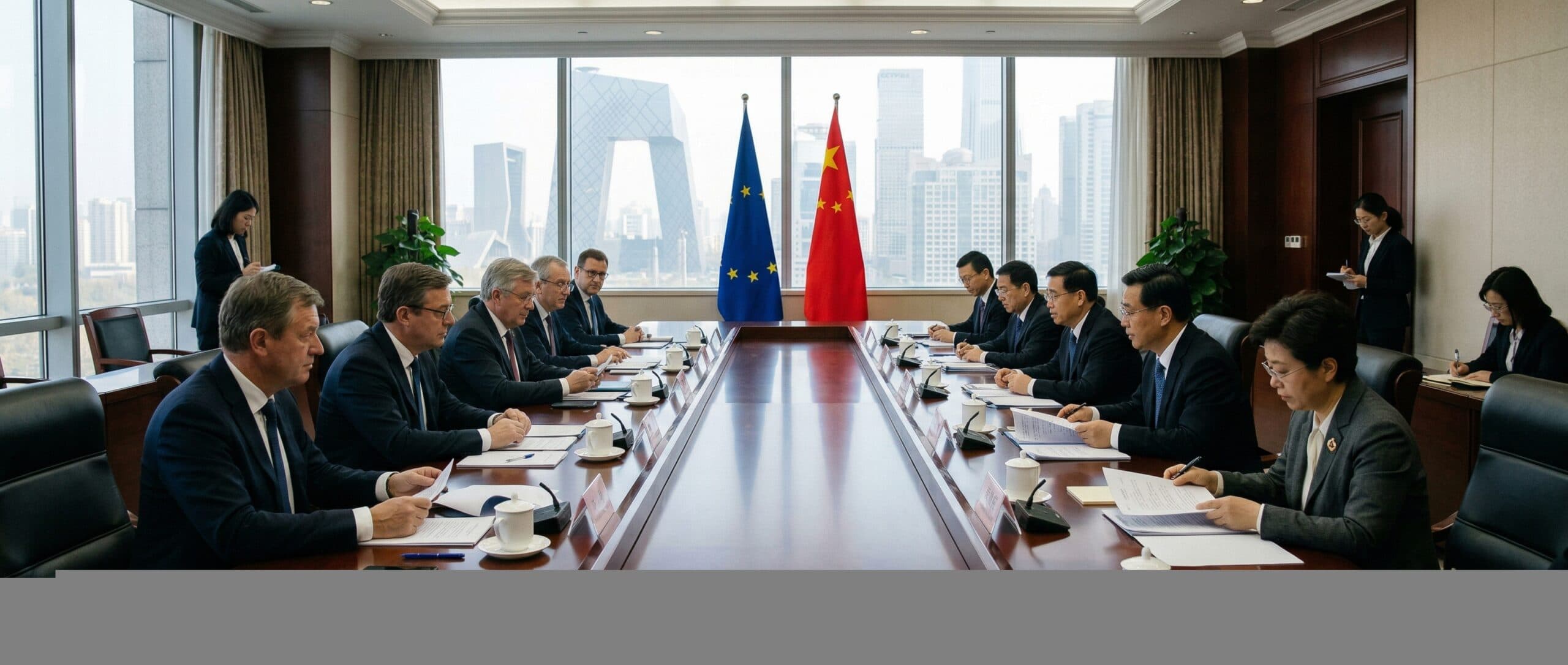
China welcomed a delegation of European lawmakers this week, marking the first such visit in eight years. The event itself is straightforward: lawmakers traveled to Beijing, met with Chinese officials, and engaged in what is typically described as high-level dialogue. But the context is what makes the visit noteworthy.
The relationship between China and the European Union had deteriorated enough over the past several years that direct parliamentary contact essentially ceased. The freeze was not accidental; it reflected real tensions over human rights concerns, trade practices, sanctions, and broader geopolitical alignment. When official channels go silent for that long, reopening them sends a message.
Last year, retaliatory sanctions that had been imposed between the two sides were lifted. That development created diplomatic space—a moment when both parties signaled they were willing to move past the most acute phase of confrontation. The current visit to Beijing appears to be a follow-up to that thaw, a way of testing whether the relationship can stabilize without resolving every underlying disagreement.
Why Eight Years Without a Visit Matters
The length of the hiatus is itself significant. Eight years is a substantial gap in diplomatic engagement between major global powers. It reflects a relationship that had moved beyond routine disagreement into something closer to deliberate avoidance. During that time, tensions accumulated rather than being managed through direct conversation.
The lifting of retaliatory sanctions last year suggested a recognition on both sides that the escalation was unsustainable. Neither China nor the European Union achieved their objectives through confrontation, and the costs of continued friction were mounting. The current visit can be understood as a careful test of whether de-escalation can become normalized.
It is important to note that the return of European lawmakers to Beijing does not mean the underlying tensions have vanished. Trade disputes, human rights concerns, and strategic rivalry remain. What the visit suggests is that both sides are willing to manage these tensions through dialogue rather than through the absence of contact.
Why Beijing May Want Better Ties With Europe Now
China’s decision to invite European lawmakers reflects a strategic calculation. The European Union represents a major economic bloc and geopolitical player. Maintaining channels of communication with the EU serves China’s interests in several ways.
First, stability with Europe reduces diplomatic pressure. When the relationship is completely frozen, China faces criticism and coordinated action from EU member states and institutions. By reopening engagement, Beijing can reduce that pressure and create space for negotiation on trade and other issues.
Second, Europe remains important to China’s broader strategic interests. The EU is not aligned with China, but it is also not formally aligned against China in the way some other powers are. That ambiguous positioning gives China incentive to keep ties workable. A completely broken relationship with Europe pushes the EU closer to other partners and reduces Beijing’s influence.
Third, the timing suggests China may be pursuing a broader diplomatic offensive aimed at stabilizing relationships with major partners. The visit fits into a pattern of engagement rather than isolation, which may reflect Beijing’s assessment that confrontation on multiple fronts is costly.
Why European Lawmakers Matter in This Story
The visit is specifically of European lawmakers, not EU trade negotiators or business delegations. This distinction carries diplomatic meaning. Lawmakers represent the political dimension of the relationship, not merely the commercial one.
Parliamentary engagement signals formal political contact at a level below heads of state but well above routine diplomacy. When lawmakers visit, they carry political legitimacy and represent not just individual governments but also broader political constituencies. Their presence in Beijing indicates that China is willing to engage with Europe’s political institutions and representatives, not just its executive branch.
This matters because it suggests the relationship is being reset at the political level, not just the bureaucratic level. Lawmakers influence policy and public opinion in their home countries. Their visit to China and their conversations with Chinese officials create opportunities for dialogue that can shape how Europe perceives China and vice versa.
The Broader Significance for Global Relations
Why should readers beyond the geopolitics community care about this visit? Because China-EU relations affect more than just trade and diplomacy between those two actors.
The relationship influences how Europe aligns itself in a world where China and Western democracies are competing for influence and advantage. A stable China-EU relationship means the EU is less likely to align completely with the United States against China, and vice versa. It creates space for independent European agency rather than forcing countries into binary choices.
For businesses, diplomats, and policy officials tracking China-EU relations, the visit is also significant because it may herald a period of more regular contact and potentially fewer sudden escalations. That stability is valuable, even if underlying disagreements persist.
At the same time, readers should be cautious about overclaiming the significance of the visit. A single delegation of lawmakers is not the same as a complete reset of relations. The visit is a beginning, not an ending. It opens a channel; it does not resolve the tensions that closed it in the first place.
What Comes Next: Signs to Watch
The real test of whether this visit represents a durable shift will come in the weeks and months that follow. Several developments are worth monitoring.
First, watch for follow-up visits. If the current delegation is followed by additional exchanges—Chinese officials visiting Europe, more European lawmakers returning to Beijing—then the pattern suggests a normalization of engagement. A single visit could be symbolic theater; a series of visits becomes routine diplomatic practice.
Second, pay attention to whether the engagement leads to concrete policy movement. Do conversations between lawmakers translate into discussions about trade, sanctions relief, or other substantive issues? Or does the visit remain a gesture without follow-through? The difference between symbolic engagement and meaningful engagement matters.
Third, consider how both sides characterize the visit in their public messaging. Are Chinese officials saying they want broader engagement with Europe, or are they framing this as a one-off event? Are European officials treating this as the beginning of a new phase or as a limited diplomatic courtesy? The rhetoric will reveal how serious both sides are about resetting the relationship.
Finally, track whether the visit leads to more regular parliamentary dialogue or to other forms of resumed contact. Does it become a precedent for more engagement, or does it remain an isolated moment?
Understanding the Visit in Context
To make sense of why China welcomes European lawmakers after eight years, it helps to understand the journey that led to this moment. The visit did not occur in a vacuum; it emerged from a specific historical context and reflects current strategic calculations.
The relationship between China and Europe has been complicated for years. Issues ranging from trade imbalances to technology competition to human rights concerns have created friction. But the scale of the current diplomatic effort suggests both sides are trying to manage these disagreements rather than allow them to fester.
The lifting of retaliatory sanctions last year was the first concrete sign that both parties were ready to move past the worst of the escalation. This week’s visit represents the next step: direct, high-level political engagement aimed at rebuilding communication channels.
The visit also reflects a broader reality about how major powers navigate disagreement. Even when they compete and contest each other’s interests, they benefit from maintaining communication. The absence of dialogue does not resolve conflicts; it often intensifies them. By reopening communication, China and the European Union are acknowledging that ongoing confrontation serves neither side well.
Frequently Asked Questions
Why is China welcoming EU lawmakers important?
Because it marks the first such visit in eight years and signals that Beijing is trying to stabilize relations with the European Union. In diplomatic terms, reopening a frozen channel is significant because it represents a choice by both parties to engage rather than avoid each other. The visit suggests that both sides see value in direct communication, even if underlying disagreements persist.
What changed in China-EU relations?
The most notable recent change is that retaliatory sanctions between the two sides were lifted last year. This created diplomatic opening that had not existed for years. The current visit appears to be Beijing and Brussels testing whether they can build on that thaw and establish a more stable, regular pattern of engagement. However, many of the underlying tensions—trade disputes, technology competition, human rights concerns—remain unresolved.
Does this mean China and the EU are back to normal relations?
Not necessarily. The visit signals improved willingness to engage in direct dialogue, but it does not mean the relationship has fully reset or that all tensions have been resolved. This is a step toward normalization, not normalization itself. Both sides are testing the waters; whether they can build sustained, functional relations remains to be seen.
Why are lawmakers part of this story?
Because European lawmakers represent an important political channel between Europe and China. Parliamentary delegations carry political legitimacy and influence policy in their home countries. When lawmakers visit Beijing, it signals that China is willing to engage at the political level, not just through trade or bureaucratic channels. This form of contact is more significant than routine diplomatic meetings because it involves figures with real influence over policy and public opinion.
What is China trying to achieve?
Based on the reporting and context, China appears to be seeking better and more stable ties with the EU. This could include reducing diplomatic pressure, creating space for negotiations on trade and other issues, and maintaining influence with a major global player. By reopening engagement, Beijing signals it prefers a workable relationship with Europe to continued confrontation.
What should readers watch next?
Watch for follow-up visits between Chinese and European officials, whether the engagement leads to concrete policy changes, how both sides characterize the visit in public messaging, and whether the pattern becomes a new normal of regular parliamentary dialogue. These indicators will reveal whether the current visit represents a genuine shift in relations or remains a limited diplomatic gesture.
Conclusion: A Signal, Not a Solution
China’s decision to host European lawmakers after eight years is ultimately a signal rather than a solution. It demonstrates that both Beijing and Brussels recognize the cost of prolonged confrontation and see value in reopening lines of communication. The visit suggests a possible trajectory toward more stable relations, but it does not guarantee that such stability will materialize.
For readers tracking China-EU relations, the visit is worth attention precisely because it is modest. It is not a dramatic breakthrough or a complete reconciliation. Instead, it is a careful, incremental step toward rebuilding a relationship that had deteriorated significantly. In geopolitics, such steps often matter more than the grand gestures that dominate headlines.
The real significance of this week’s visit will become clear only in retrospect, as readers see whether it marks the beginning of sustained engagement or remains a brief moment of civility in an otherwise tense relationship. For now, what matters is understanding what the visit represents: an acknowledgment by both sides that the alternative—complete diplomatic freeze—is less attractive than the risks and complications of direct engagement.