EU Lawmakers Press China on Unsafe Products and Market Access in Rare Beijing Visit
During the first European parliamentary visit to China in eight years, EU lawmakers raised urgent concerns about dangerous products flooding the European market and limited business access to China. The rare diplomatic exchange signals both ongoing engagement and persistent trade friction.
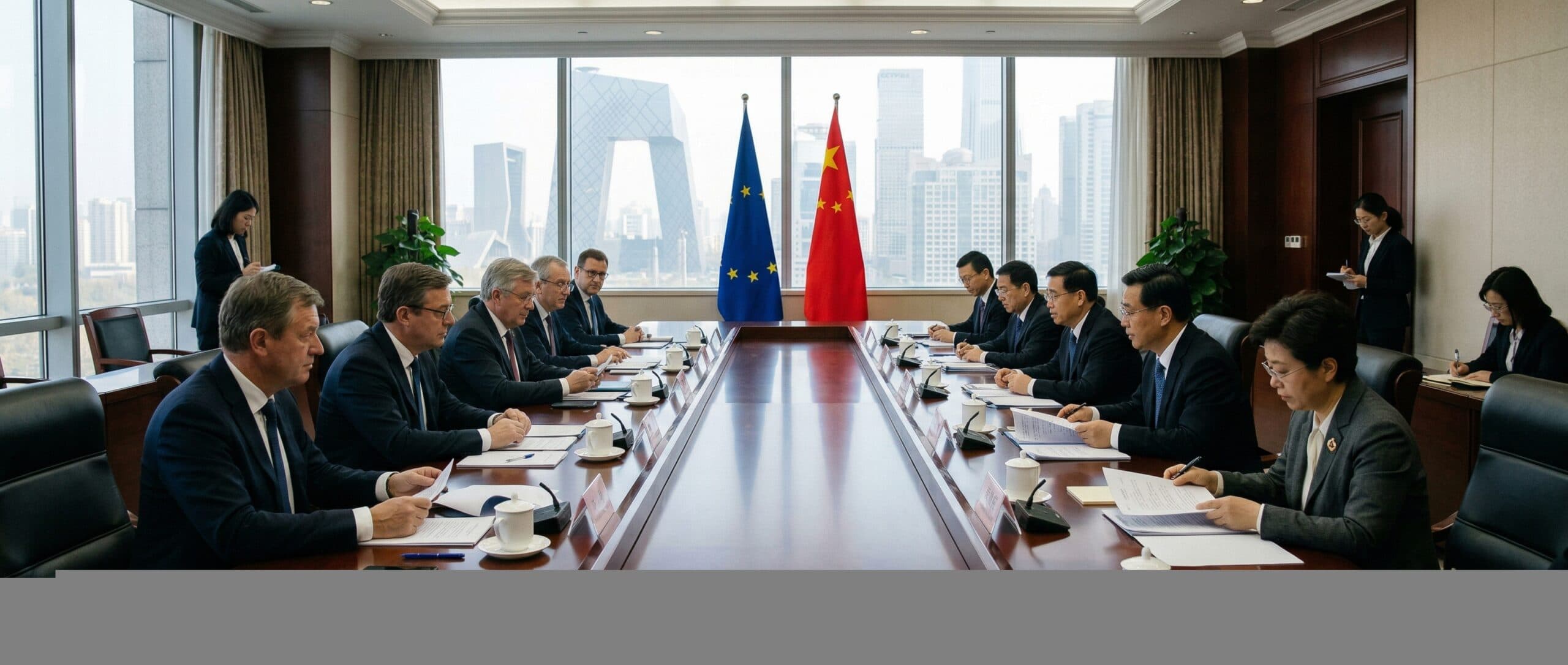
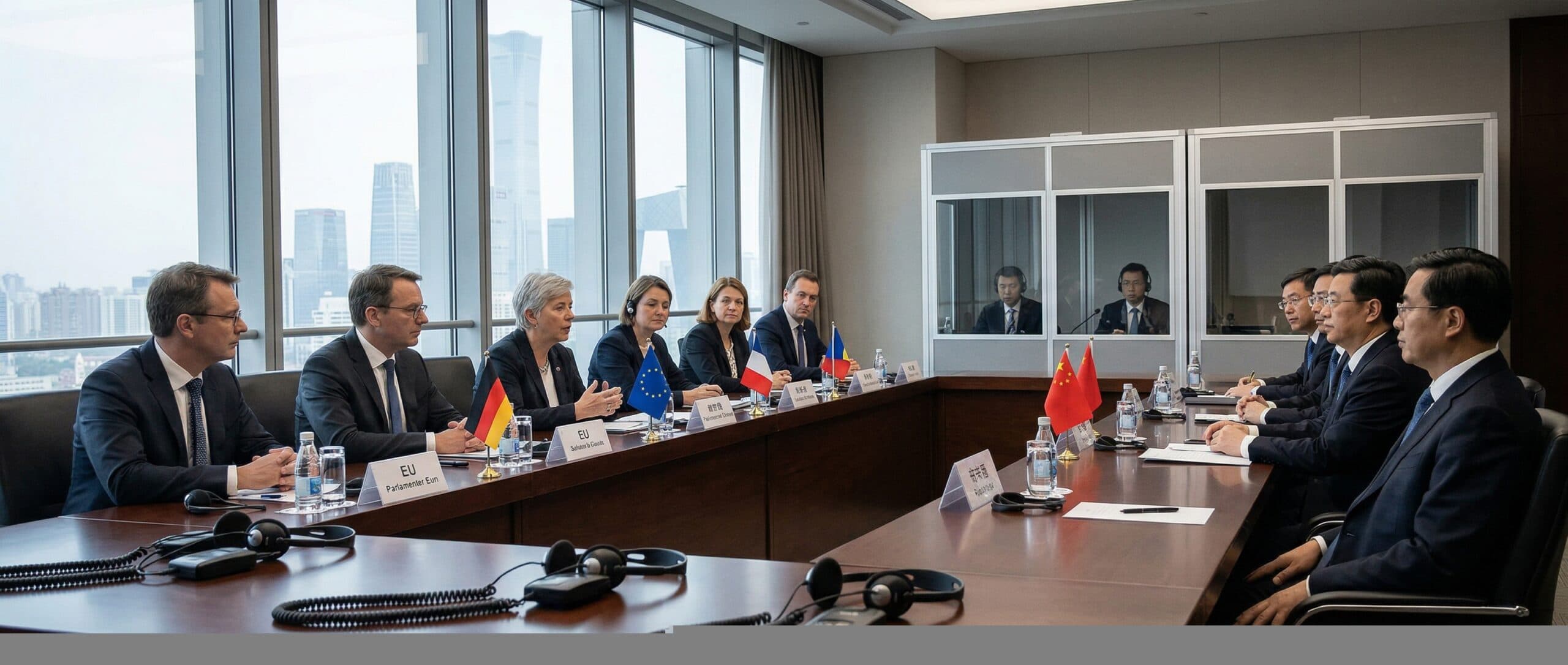
A rare European parliamentary visit to Beijing has become a platform for direct pressure on China over two interconnected concerns: a reported surge of unsafe products entering the European Union and insufficient market access for European companies in China. According to reporting from Reuters, EU lawmakers used the high-level exchange to challenge both consumer safety failures and barriers to European business expansion on the Chinese market.
The timing and rarity of the visit underscore its diplomatic significance. This marks the first European parliamentary visit to China in eight years—a gap that makes the current engagement both notable and loaded with implications about the state of EU-China relations. Rather than serving as a ceremonial photo opportunity, the delegation appears to have seized the uncommon opportunity to confront unresolved trade and regulatory disputes directly with Chinese counterparts.
For readers following EU-China relations, consumer safety, supply-chain regulation, or international trade policy, this exchange reveals how closely linked these issues have become. The visit also demonstrates that despite ongoing geopolitical tensions, both sides continue to see value in direct parliamentary-level dialogue.
What Happened in Beijing
EU lawmakers traveling to Beijing this week raised concerns with Chinese officials about dangerous products reaching European consumers and European firms struggling to gain meaningful market access in China. The two issues were presented not as separate complaints but as connected dimensions of a broader trade and regulatory problem.
The visit itself is the foundation of the story. According to Reuters reporting, this is the first time the European Parliament has sent a delegation to China in eight years. That long interval between high-level parliamentary visits reflects the volatility and complexity of EU-China relations—a relationship that oscillates between cooperation and confrontation depending on the political winds.
By selecting this rare moment to focus on unsafe products and market access, EU lawmakers signaled that these are no longer peripheral grievances but central issues worthy of direct political engagement at the highest level.
Why This Visit Matters
An eight-year gap between parliamentary delegations is striking. In the normal rhythm of international relations, regular parliamentary exchanges are routine. Their absence suggests either a breakdown in dialogue or a deliberate cooling of formal ties. The resumption of such a visit, therefore, carries symbolic weight beyond the immediate agenda items.
Rare visits can signal one of two things: either a thawing of relations and a genuine effort to rebuild ties, or the opposite—a recognition that problems have become so serious or unresolved that direct political pressure is necessary. In this case, the evidence points to the latter. EU lawmakers are using the visit as a direct diplomatic channel precisely because standard channels and lower-level negotiations have not resolved these concerns.
The rarity also amplifies the message. When a delegation makes the journey after an eight-year hiatus, it suggests the issues on the table warrant that exceptional effort. For Chinese officials, receiving such a delegation and listening to these concerns indicates that Brussels considers the relationship important enough to invest in active engagement, even when disputes run deep.
Unsafe Products and Consumer Safety in the EU
The consumer safety dimension of this dispute reflects a real and documented pattern. The reported concern is not about a single recalled product but a broader surge of dangerous goods entering European markets. These might include items that fail to meet EU safety standards, lack proper certification, or pose direct risks to consumers—from faulty electrical equipment to goods with banned substances.
For EU regulators, this is not merely a technical compliance issue. It touches on fundamental questions of market oversight, import enforcement, and the EU’s ability to protect its citizens. When unsafe products flood the market, they expose European consumers to risk while also creating competitive disadvantages for legitimate European and international manufacturers who comply with safety standards.
The scale of the problem appears significant enough to warrant raising it at the parliamentary level. EU lawmakers are not typically involved in day-to-day product recalls or customs enforcement, so their involvement here suggests the issue has reached a political threshold. Whether through regulatory gaps, enforcement challenges, or volume of problematic shipments, the unsafe products concern has become urgent enough for politicians to weigh in directly.
By pressing China on this issue, EU lawmakers are essentially asking Beijing to take responsibility for ensuring that products manufactured or shipped from Chinese territory meet European safety standards—or, at minimum, to work more closely with EU regulators to prevent dangerous goods from entering European supply chains.
Market Access and the Broader Trade Dispute
The second issue raised during the Beijing visit—limited market access for European companies in China—points to a deeper structural tension in EU-China trade relations. While the EU generally maintains relatively open markets for Chinese goods and services, European firms often face significant barriers when trying to expand into China. These barriers might take the form of regulatory requirements, foreign ownership restrictions, technological transfer demands, or simply bureaucratic obstacles.
What makes this issue particularly potent is that EU lawmakers are linking it directly to the unsafe products concern. In effect, they are arguing that while Chinese manufacturers have relatively easy access to European markets, European companies do not enjoy the same access in reverse. This asymmetry creates a perception of unfair trade dynamics and has become a recurring complaint in EU policy circles.
The connection between the two issues is not merely rhetorical. By pairing market access demands with consumer safety complaints, EU lawmakers are framing the conversation around reciprocity and mutual responsibility. They are saying, in essence: if Chinese producers benefit from the openness of European markets, then China should reciprocate by allowing European firms meaningful market access and by ensuring that products entering the EU meet European standards.
This approach transforms what could be dismissed as two separate trade grievances into a coherent argument about fair competition and mutual respect for regulatory standards.
What This Reveals About EU-China Relations
The Beijing visit and the issues raised during it offer a window into the current state of one of the world’s most consequential economic relationships. EU-China ties are characterized by a fundamental tension: both sides benefit enormously from trade and economic cooperation, yet both also harbor serious concerns about fairness, access, and strategic interests.
The fact that EU lawmakers are using a rare parliamentary visit to press these complaints indicates that traditional diplomatic channels and technical negotiations have not fully resolved them. This does not necessarily mean relations are collapsing, but it does suggest that frustration on the European side has reached a point where political pressure is needed.
The rarity of the visit, combined with its focus on concrete grievances, also suggests that both sides still see value in dialogue. If EU-China relations were truly frozen, a parliamentary delegation would not make the journey. The very fact of the visit, despite tensions, indicates that Brussels and Beijing recognize the relationship is too important to let deteriorate completely. At the same time, the specific issues being raised make clear that cooperation cannot be taken for granted.
This dynamic—ongoing engagement mixed with persistent friction—is likely to define EU-China relations for the foreseeable future. Neither side appears ready for a complete break, but neither is willing to overlook significant disputes in the name of smoother relations.
What Happens Next
The immediate aftermath of the Beijing visit will offer clues about whether the EU’s pressure is likely to produce concrete results. Readers should watch for several signals: whether Chinese officials respond publicly to the concerns raised, whether either side announces follow-up commitments or technical working groups to address product safety or market access, and whether this rare visit leads to more regular parliamentary engagement or remains an exception.
It is also worth observing whether the EU frames these issues as linked or allows them to be separated into different policy channels. Keeping them connected—market access for EU firms only if unsafe products are addressed—is a form of diplomatic leverage. Letting them become separate issues could weaken the EU’s negotiating position.
For European companies, consumers, and policymakers, the Beijing exchange is not just a news event but a signal that trade and regulatory disputes with China remain at the top of EU political agendas. Whether the result is meaningful change or merely reiteration of familiar complaints will become clearer in the weeks and months ahead.
Frequently Asked Questions
Why are EU lawmakers pressing China on unsafe products?
EU lawmakers are concerned about a reported surge of dangerous products entering the European Union. By raising this issue during their rare visit to Beijing, they are pushing China to take direct responsibility for ensuring that products manufactured or exported from Chinese territory meet European safety standards.
Why is this Beijing visit unusual?
According to Reuters reporting, this is the first European parliamentary visit to China in eight years. The long gap between such high-level parliamentary delegations makes this visit notable as a marker of both diplomatic engagement and the persistently strained nature of EU-China relations.
What other issue did EU lawmakers raise?
Beyond product safety, EU lawmakers also pressed China on insufficient market access for European companies. They argued that while Chinese firms have relatively open access to European markets, European businesses face significant barriers when trying to expand into China.
Is this mainly a trade story or a consumer-safety story?
It is both. The reporting links consumer safety concerns in the EU with broader trade concerns about market access in China. EU lawmakers are intentionally framing these issues as connected, arguing that reciprocal market access and product safety responsibility should go hand in hand.
Did the visit lead to any immediate agreement or policy change?
According to available reporting, the visit itself has not been reported to produce a concrete agreement or policy change. Rather, it served as an opportunity for EU lawmakers to apply direct political pressure on these long-standing concerns.
Why does this matter to people outside the EU and China?
Because it affects global supply chains, consumer safety standards, and the trajectory of the world’s most important economic relationship. How the EU and China resolve disputes over product safety and market access influences trade patterns, regulatory standards, and the broader state of international economic relations.