Leaked Hungary-Russia Audio Exposes Critical Fracture in EU Sanctions Unity
A leaked recording of Hungary's foreign minister discussing EU sanctions with Russia's Sergei Lavrov has ignited a firestorm across European capitals, revealing a deep fracture in the bloc's strategic trust and unity at a moment of high geopolitical tension.
A single audio recording has pulled back the curtain on a private conversation that is now reverberating through the halls of power across Europe, threatening to redefine the continent’s internal battle lines. The leaked discussion, as reported by Reuters, features Hungary’s Foreign Minister Péter Szijjártó talking with his Russian counterpart, Sergei Lavrov, about the European Union’s sanctions policy against Moscow.
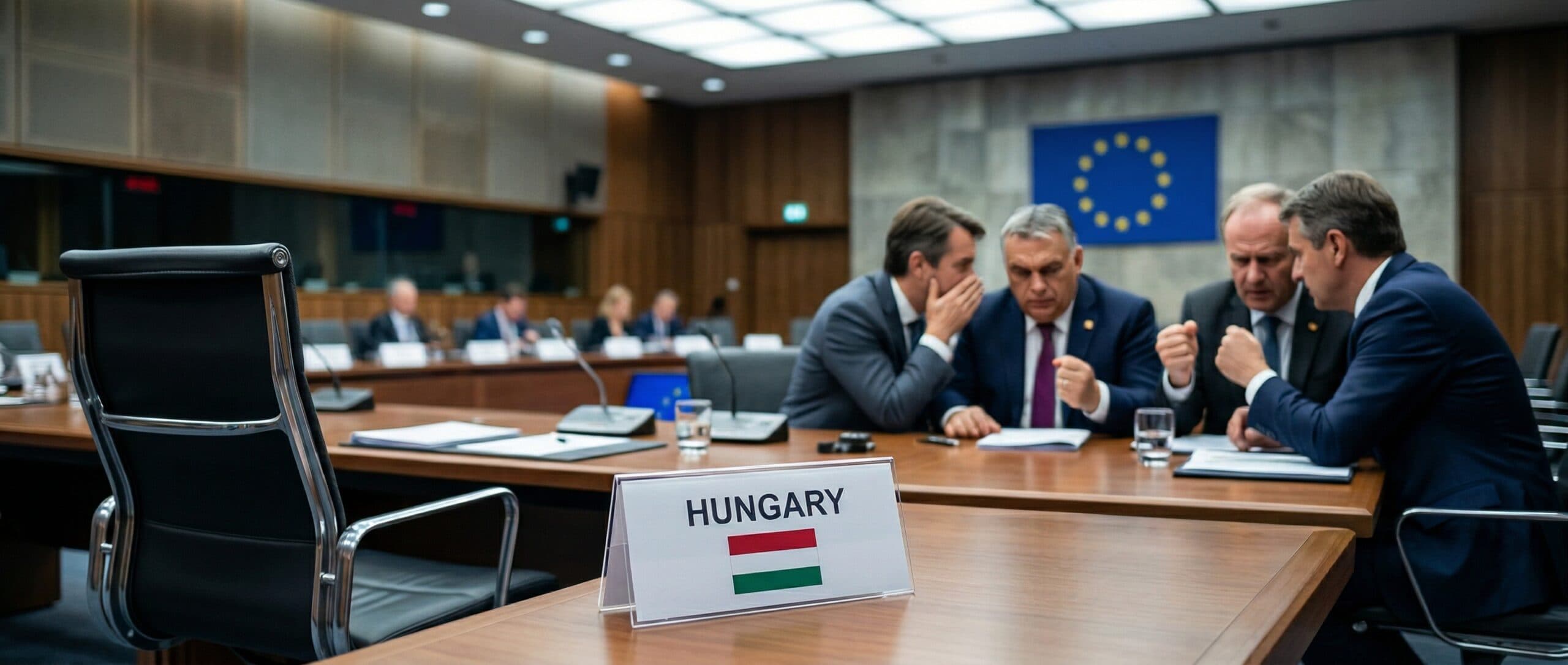
The immediate fallout has been swift and severe. The revelation has ignited fierce criticism from other EU capitals, particularly from staunch supporters of Ukraine like Poland and the Czech Republic, transforming what might have been a bilateral scandal into a profound stress test for the European Union’s cohesion and strategic credibility.
The Leak: What Was Said and Why It Matters Immediately
The core of the controversy, first detailed by Reuters, is the content of the audio itself: Hungary’s top diplomat was engaged in a discussion with Russia’s foreign minister about the very sanctions the EU has imposed as its primary tool to pressure Moscow over the war in Ukraine. While the full, specific transcripts have not been publicly released in their entirety, the mere act of discussing the bloc’s collective punitive measures with the targeted adversary is seen as a severe breach of diplomatic trust and bloc solidarity.
The reaction was immediate. According to Bloomberg, the leak prompted a wave of condemnation from other member states. Officials in Warsaw and Prague, long critical of Budapest’s perceived soft line on Russia, pointed to the recording as evidence of Hungary acting as a potential conduit for Moscow’s preferences within the EU. This swift backlash underscores that the incident is not being treated as a mere diplomatic faux pas, but as a direct challenge to the integrity of the EU’s common foreign policy.
Beyond the Scandal: The Real Test of EU Cohesion
To understand the gravity of the leak, one must look beyond the scandalous headlines to the foundational principle it undermines: EU common foreign and security policy. The bloc’s power, particularly in a geopolitical confrontation with a major power like Russia, hinges on its ability to present a united front. Sanctions are most effective when they are seen as airtight and non-negotiable, backed by the collective economic weight of 27 nations.
Private discussions about these sanctions with the very country they target violate the spirit, if not always the precise letter, of sincere cooperation among member states. This transforms EU sanctions policy from a tool of external pressure into an internal loyalty test. It raises a critical question: can the EU maintain a credible, unified strategy if one of its members appears to be negotiating the terms of that strategy with the adversary behind closed doors? The leak forces this uncomfortable question to the forefront of every EU council meeting.
Hungary’s Position: Context and Controversy
Hungary’s stance within the EU is not new, but the leak dramatically sharpens the existing tensions. Since Russia’s full-scale invasion of Ukraine in 2022, Budapest has repeatedly delayed or watered down successive EU sanctions packages. Prime Minister Viktor Orbán’s government has consistently cited Hungary’s heavy dependence on Russian energy and the need to protect its national economy as reasons for its skepticism.
This pattern of divergence is well-documented. However, the leaked audio suggests a shift from public disagreement and tactical vetoes to what critics see as active coordination with Moscow. The timing is also politically charged, coming just before a consequential Hungarian national election, where the government’s stance on the war and relations with Russia are key campaign issues. The incident thus sits at the volatile intersection of domestic politics and EU collective action.
Strategic Implications: Leverage, Trust, and Europe’s Credibility
The second-order consequences of the leak are perhaps more significant than the immediate political firestorm. Firstly, it directly weakens the EU’s collective leverage. When negotiating with Moscow, European diplomats rely on the implicit threat of sustained, unified economic pressure. Perceived internal divisions signal to the Kremlin that the bloc’s resolve may be fracturing, potentially encouraging it to wait out European disunity rather than alter its course in Ukraine.
Secondly, it erodes strategic trust among member states. The EU functions on a complex system of political give-and-take, but a fundamental assumption is that, on core security issues, all members are ultimately pulling in the same direction. This leak seeds doubt about that assumption, making future consensus on sensitive foreign policy issues even harder to achieve. It feeds into a broader debate about whether the EU can ever become a truly unified geopolitical actor, or whether it will remain hamstrung by divergent national interests and threat perceptions.
What Happens Next: Scenarios and Consequences
The path forward is uncertain, but several potential consequences are already being discussed in Brussels and other capitals. While a swift, dramatic punishment like activating Article 7—which can ultimately suspend a member’s voting rights—is considered unlikely due to its high political bar, Hungary faces other forms of fallout. Expect increased diplomatic isolation within council meetings, where trust is currency.
More concretely, the incident could accelerate discussions among other member states about using procedural workarounds to bypass Hungarian vetoes on future sanctions packages or other foreign policy decisions. Furthermore, the EU may link Hungary’s continued obstruction more explicitly to the release of billions in frozen EU cohesion funds, using financial leverage to enforce political alignment. The leak will also undoubtedly influence the upcoming Hungarian election campaign and cast a long shadow over future EU summits dedicated to security and support for Ukraine.
Frequently Asked Questions
What was in the leaked Hungary-Russia audio?
The leaked audio, as reported by Reuters, features Hungary’s Foreign Minister Péter Szijjártó discussing EU sanctions policy with his Russian counterpart, Sergei Lavrov. The specific details of the discussion have not been fully disclosed, but the mere act of discussing the bloc’s sanctions with Moscow is seen as a breach of diplomatic trust.
Why is this leak such a big deal for the EU?
It suggests a member state is not fully aligned with the EU’s common foreign policy and may be coordinating with a geopolitical adversary on the bloc’s primary external pressure tool. This undermines unity, weakens strategic credibility, and turns sanctions into an internal political issue.
Has Hungary blocked EU sanctions before?
Yes. Hungary has frequently used its veto or threat of veto to delay, water down, or extract concessions in exchange for agreeing to EU sanctions packages against Russia, often citing energy security and economic protection.
What can the EU do about Hungary’s actions?
Options range from political pressure in council meetings to more formal procedures like Article 7 (which can suspend rights) though that is a high bar. More likely are continued diplomatic isolation, linkage to EU funding, or procedural changes to bypass vetoes in specific areas.
How does this affect the war in Ukraine?
It indirectly affects the war by testing the unity and credibility of the Western alliance supporting Ukraine. If EU sanctions are perceived as porous or negotiable behind closed doors, it weakens the economic pressure on Russia and Europe’s overall geopolitical stance.
Did Hungary break EU law?
It’s unlikely to be a clear legal breach of EU treaties, which protect national control over foreign policy. However, it likely violates the political principle of sincere cooperation and the expectation of united action in foreign affairs, which is a serious political transgression.